CBD vs. THC: What's the Difference?
CBD and THC are the two most well-known cannabinoids, but they work very differently. Here's what sets them apart — effects, legality, and which one is right for you.
By Hightree Team for The Canopy
March 26, 2026 · 7 min read
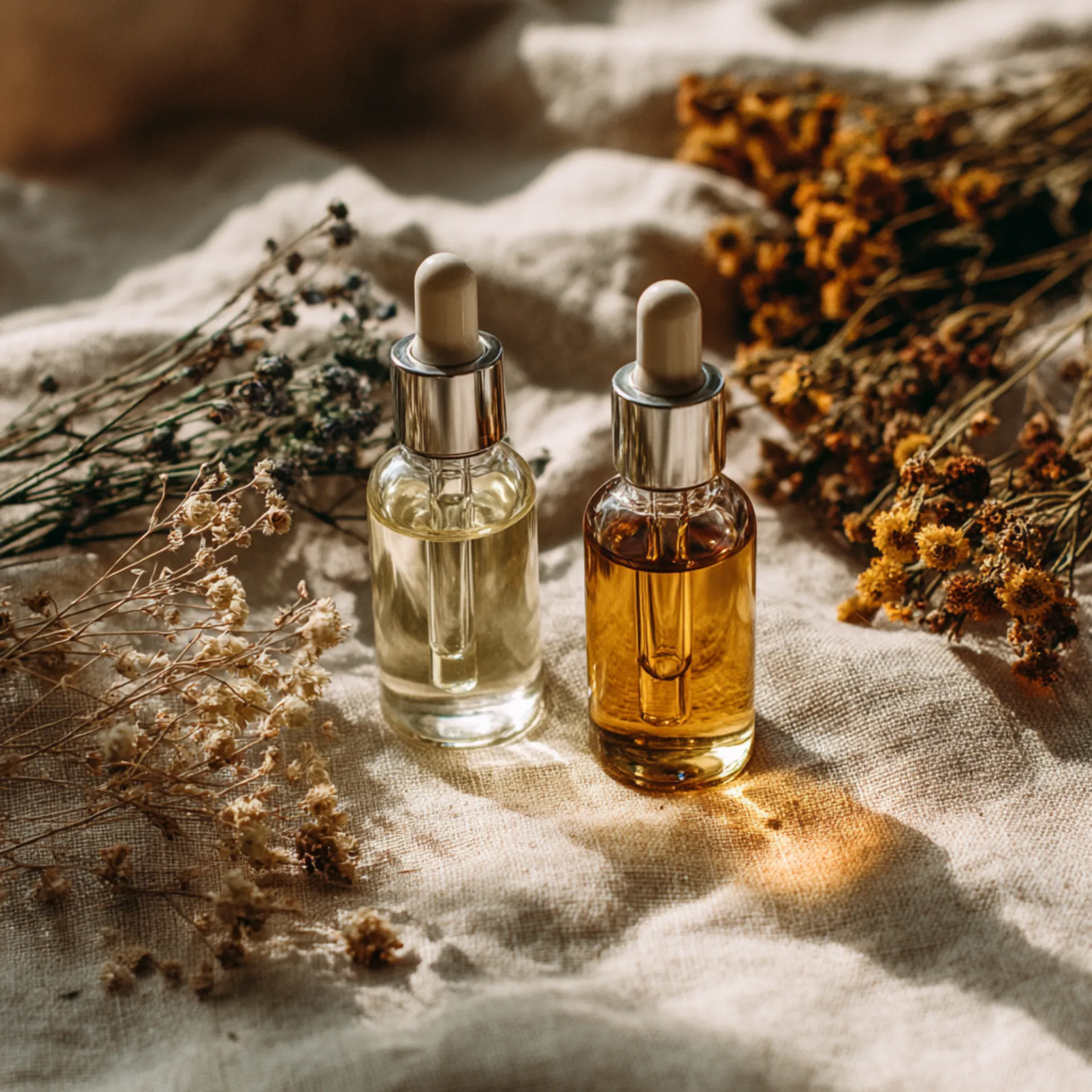
Two glass dropper bottles side by side on a warm linen surface
If you're even slightly curious about cannabis, you've heard these two acronyms: THC and CBD. They're the two most abundant cannabinoids in the cannabis plant, and they're responsible for the vast majority of effects people associate with cannabis products.
But despite coming from the same plant, THC and CBD do very different things in your body. Understanding the distinction is the single most important step in choosing the right cannabis product for your needs.
The Basics
THC (tetrahydrocannabinol) is the primary psychoactive compound in cannabis. It's what produces the "high" — euphoria, altered perception, relaxation, and increased appetite. THC binds directly to CB1 receptors in your brain and nervous system.
CBD (cannabidiol) is non-psychoactive. It won't get you high. Instead, CBD interacts with your endocannabinoid system in more indirect ways — modulating receptor activity, influencing serotonin receptors, and reducing the breakdown of your body's own endocannabinoids. The result is typically described as calming, grounding, and anti-inflammatory.
Both compounds have the exact same molecular formula: C21H30O2. The difference is in how those atoms are arranged — a small structural variation that produces dramatically different effects.
How They Feel
THC Effects
- Euphoria and mood elevation
- Altered sense of time
- Increased sensory awareness (music sounds better, food tastes stronger)
- Physical relaxation or energy (strain-dependent)
- Increased appetite ("the munchies")
- At high doses: anxiety, paranoia, or discomfort in some people
CBD Effects
- Reduced anxiety and stress
- Anti-inflammatory effects
- Pain relief (particularly nerve and inflammatory pain)
- Improved sleep (at higher doses)
- No impairment, no euphoria, no altered perception
- Generally well-tolerated even at high doses
The key difference: THC changes how you think and perceive. CBD changes how you feel physically and emotionally, without altering your mental state.
The Entourage Effect
THC and CBD don't just work independently — they interact with each other. CBD actually modulates THC's effects, reducing some of its less desirable side effects like anxiety and paranoia.
This is why many experienced consumers prefer products with both THC and CBD rather than pure THC. A 1:1 ratio (equal parts THC and CBD) is often described as the most balanced cannabis experience — the therapeutic benefits of both compounds with reduced risk of THC-related anxiety.
Common ratios and what they feel like:
- High THC, no CBD: Strong psychoactive effects. Best for recreation or experienced consumers.
- 2:1 THC:CBD: Noticeably psychoactive but smoother, more controlled. Good for moderate experience.
- 1:1 THC:CBD: Balanced. Mild psychoactivity with strong therapeutic effects. Often recommended for medical use.
- 1:2 CBD:THC: Mostly therapeutic with very light psychoactivity. Good for daytime use.
- CBD only: No psychoactivity. Purely therapeutic. Legal in most jurisdictions.
Legality
This is where things get complicated — and where THC and CBD diverge sharply.
CBD
The 2018 Farm Bill federally legalized hemp and hemp-derived products, including CBD, as long as the THC content is below 0.3% by dry weight. This means CBD oils, gummies, topicals, and other products are legal to buy and sell in all 50 states (with some state-level restrictions).
THC
THC remains federally classified as a Schedule I controlled substance. However, individual states have their own laws:
- Recreational cannabis: Legal in 24 states plus Washington D.C. (as of 2026)
- Medical cannabis: Legal in 38 states
- Delta-8 THC: A legal gray area. Derived from hemp but psychoactive. Banned in some states, unregulated in others.
Always check your state's specific laws before purchasing THC products.
Medical Applications
Both cannabinoids have documented medical applications, but they tend to target different conditions.
THC is commonly used for:
- Chronic pain
- Nausea and vomiting (especially from chemotherapy)
- Appetite stimulation (HIV/AIDS wasting, eating disorders)
- Muscle spasticity (multiple sclerosis)
- Insomnia
- PTSD symptoms
- Glaucoma
CBD is commonly used for:
- Anxiety disorders
- Epilepsy (Epidiolex is an FDA-approved CBD medication for seizures)
- Inflammatory conditions (arthritis, IBD)
- Chronic pain
- Sleep disorders
- Substance abuse recovery (reducing cravings)
- Skin conditions (acne, eczema — topical application)
Both together are used for:
- Complex pain conditions
- Cancer-related symptoms
- Neurological disorders
- General wellness and stress management
Side Effects
THC Side Effects
- Dry mouth
- Red eyes
- Increased heart rate
- Impaired short-term memory
- Slower reaction time
- Anxiety or paranoia (dose-dependent)
- Possible dependency with heavy, long-term use
CBD Side Effects
- Generally mild
- Fatigue or drowsiness (at higher doses)
- Diarrhea (at very high doses)
- Changes in appetite
- Potential interaction with certain medications (CBD inhibits cytochrome P450 enzymes, which metabolize many pharmaceuticals)
CBD's side effect profile is significantly milder than THC's, which is one reason it's become so popular for daily wellness use.
Drug Testing
THC will show up on a standard drug test. Most workplace drug tests screen for THC-COOH, a metabolite of THC that can remain detectable in urine for 3-30 days depending on usage frequency.
CBD itself doesn't trigger a positive drug test. However, many CBD products contain trace amounts of THC (up to the legal 0.3% limit), which can accumulate with daily use and potentially cause a positive result. If drug testing is a concern, look for CBD isolate products — these contain only CBD with no other cannabinoids.
Product Types
Both THC and CBD come in similar product formats:
- Flower: Smokable cannabis. THC-dominant strains are the most common, but high-CBD strains like Charlotte's Web and ACDC exist.
- Oils and tinctures: Liquid extracts taken sublingually. Available in every ratio from pure CBD to pure THC.
- Edibles: Gummies, chocolates, beverages. Both THC and CBD varieties widely available.
- Topicals: Creams, balms, patches. CBD topicals are popular for localized pain. THC topicals exist but are less common.
- Vape cartridges: Concentrated extracts for vaporizing. Fast onset, available in all ratios.
- Capsules: Standardized doses for consistent daily use.
Which One Should You Choose?
Choose CBD if you:
- Want therapeutic benefits without any high
- Need to stay clear-headed for work or driving
- Are subject to drug testing
- Are new to cannabis and want to start gently
- Deal with anxiety, inflammation, or mild pain
- Live in a state without legal THC
Choose THC if you:
- Want psychoactive effects (recreation, creativity, relaxation)
- Need stronger pain relief
- Struggle with severe insomnia or appetite issues
- Have experience with cannabis
- Live in a state with legal recreational or medical cannabis
Choose both (1:1 or similar ratio) if you:
- Want balanced therapeutic and psychoactive effects
- Find pure THC too intense
- Are managing complex health conditions
- Want the full benefits of the entourage effect
The Bottom Line
CBD and THC are two sides of the same plant, each with distinct strengths. Neither is inherently "better" — the right choice depends on what you're looking for, your tolerance, and your legal situation.
If you're starting your cannabis journey, CBD is the safer entry point. If you're ready for the full experience, start with low-dose THC or a balanced ratio product. And regardless of which you choose, buy from vendors who provide third-party lab testing — it's the only way to know exactly what you're consuming.
The Canopy Daily — April 29, 2026
Texas hemp court fight, Missouri's hemp ban, North Carolina opens medical door, Virginia bill in limbo, and Indiana's surprise pivot.
The Canopy Daily — April 26, 2026
State-by-state rescheduling fallout, Trump urges Congress on hemp, IRS tax guidance coming, and 70% of Americans support legalization.
Ohio Judge Blocks Hemp Beverage Ban: 'THC Is THC No Matter Where It Comes From'
Ohio court halts state ban on hemp-derived THC beverages, with judge rejecting the distinction between hemp and marijuana THC that underpins state regulation.