How Cannabis Edibles Are Made: From Plant to Product
Ever wondered how THC gets into a gummy? Here's the full process — decarboxylation, infusion, and formulation — explained simply.
By Hightree Team for The Canopy
March 22, 2026 · 7 min read
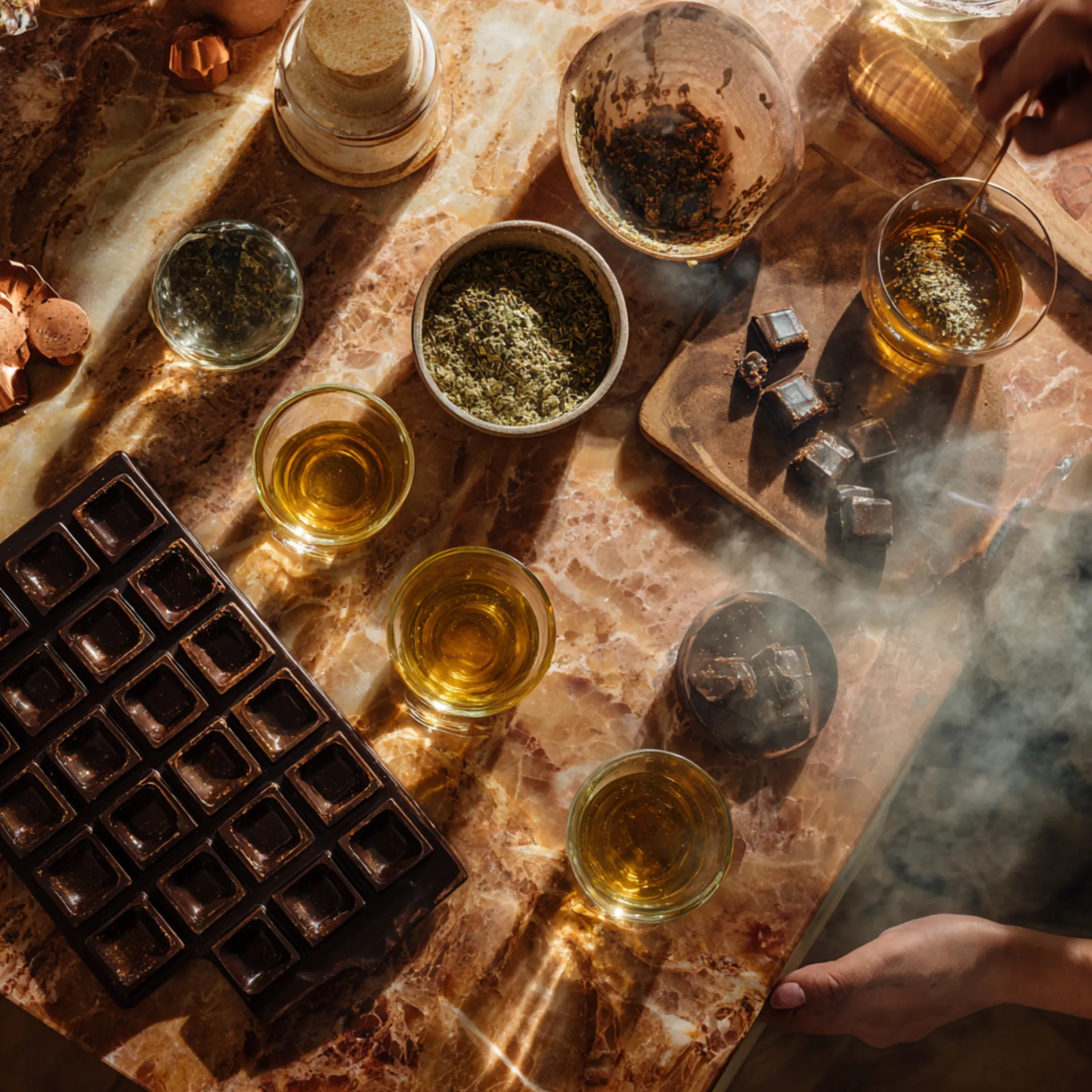
Artisan chocolate molds and golden oil on a marble countertop
Cannabis edibles are one of the fastest-growing segments of the legal market. But the process behind turning a raw cannabis plant into a precisely dosed gummy or chocolate is more complex than most consumers realize.
It's part chemistry, part food science, and part engineering — and understanding how edibles are made helps you become a smarter consumer.
Step 1: Decarboxylation
Raw cannabis doesn't contain much THC. It contains THCA (tetrahydrocannabinolic acid), a non-psychoactive precursor. To convert THCA into the psychoactive THC your body can use, you need heat. This process is called decarboxylation — or "decarbing."
When you smoke or vape cannabis, decarboxylation happens instantly from the flame or heating element. But for edibles, manufacturers need to decarb the flower before extraction.
How it works
Cannabis flower is spread on trays and heated in industrial ovens, typically at 220-245F (104-118C) for 30-45 minutes. This temperature range is precise — too low and the conversion is incomplete, too high and you start degrading THC into CBN (which is sedating but less psychoactive).
The chemistry: THCA loses a carboxyl group (COOH) when heated, releasing CO2 and becoming THC. The molecular formula changes from C22H30O4 to C21H30O2.
This single step is what separates cannabis flower you can eat with no effect from cannabis flower that will send you to the moon.
Step 2: Extraction
Once the cannabis is decarbed, the active cannabinoids need to be extracted into a usable form. There are several methods:
CO2 Extraction
The industry gold standard. Supercritical carbon dioxide (CO2 heated and pressurized until it behaves like both a liquid and a gas) is passed through cannabis material, dissolving the cannabinoids and terpenes. When the pressure is released, the CO2 evaporates, leaving behind a clean, pure extract.
Pros: No residual solvents, highly tunable (can target specific compounds), produces very clean oil. Cons: Expensive equipment, slower process.
Ethanol Extraction
Cannabis is soaked in food-grade ethanol, which dissolves the cannabinoids. The ethanol is then evaporated off, leaving concentrated cannabis oil.
Pros: Efficient, scalable, relatively simple. Cons: Can extract chlorophyll (giving a bitter, green taste), requires thorough purging of residual ethanol.
Hydrocarbon Extraction (Butane/Propane)
Common for concentrates but less common for edibles. Produces very potent extracts (BHO — butane hash oil) but requires careful purging to remove solvent residues.
Pros: Excellent at preserving terpenes, very potent. Cons: Safety concerns (flammable solvents), residual solvent risk.
Fat-Based Infusion
The traditional method — and still used by home cooks. Cannabis is simmered in butter or coconut oil. THC is fat-soluble, so it binds to the fat molecules.
Pros: Simple, accessible, no special equipment. Cons: Inconsistent potency, hard to dose precisely, limited shelf life.
For commercial edibles, CO2 and ethanol extraction are the most common. The resulting extract is a concentrated cannabis oil — typically distillate (pure THC) or full-spectrum oil (THC plus other cannabinoids and terpenes).
Step 3: Formulation
This is where food science takes over. The cannabis extract needs to be incorporated into an edible product that tastes good, has consistent dosing, and has a reasonable shelf life.
The Homogeneity Problem
The biggest challenge in edible manufacturing is homogeneity — ensuring that every gummy, every square of chocolate, every milliliter of beverage has exactly the same amount of THC.
Cannabis oil is hydrophobic (it doesn't mix with water). Drop cannabis oil into a gummy mixture and it will pool in certain spots, creating "hot spots" — some gummies with 15mg THC and others with 2mg from the same batch.
Professional manufacturers solve this with:
Emulsification: Cannabis oil is broken into tiny droplets (nanometers in size) and coated with an emulsifier that allows them to distribute evenly in water-based mixtures. This is the same technology used to keep salad dressing from separating.
Nano-emulsification: An advanced form where oil droplets are broken down even smaller (below 100 nanometers). Nano-emulsified cannabis is more bioavailable — meaning your body absorbs more THC per milligram — and distributes more evenly in products. This is why some newer edibles hit faster and harder at the same dose.
Gummies
The most popular edible format. The process:
- Heat a base of sugar, corn syrup, and gelatin (or pectin for vegan gummies)
- Add cannabis distillate or emulsified cannabis oil
- Mix thoroughly for even distribution
- Add flavoring, coloring, and citric acid
- Pour into molds
- Cool and cure (sometimes for 24-48 hours)
- Coat with sugar or sour coating
- Package with child-resistant closures
Each gummy is tested to verify that the THC content matches the label within a regulatory tolerance (typically +/- 10-15%).
Chocolates
Cannabis oil is mixed into melted chocolate during the tempering process. Chocolate's high fat content makes it a natural carrier for THC.
The challenge: chocolate tempering requires precise temperature control, and adding cannabis oil can affect the crystalline structure that gives chocolate its snap and sheen. Premium manufacturers spend significant time perfecting this process.
Beverages
The fastest-growing edible category. Cannabis beverages use nano-emulsification to create water-soluble THC that mixes into liquid without separating.
Key advantage: beverages tend to hit faster than solid edibles (sometimes within 15-20 minutes instead of 60-90) because the nano-emulsified cannabinoids are absorbed partially through the mouth and stomach lining rather than waiting for full digestive processing.
Baked Goods
Cookies, brownies, and other baked goods are infused with cannabutter or cannabis oil before baking. The challenge is heat — baking temperatures must stay below the point where THC degrades (around 350F for extended exposure), which limits what types of baked goods work well.
Step 4: Testing
Every batch of commercial edibles undergoes third-party lab testing. The tests include:
Potency Testing
- Confirms actual THC and CBD content per serving
- Verifies homogeneity (multiple samples from the same batch)
- Ensures the product is within regulatory tolerance
Contaminant Testing
- Pesticides: Over 60 pesticides screened in most states
- Heavy metals: Lead, arsenic, mercury, cadmium
- Microbial: E. coli, salmonella, mold, yeast
- Residual solvents: Butane, propane, ethanol levels (if applicable)
- Mycotoxins: Toxic compounds produced by certain molds
Compliance Testing
- Serving size and total package limits (varies by state — typically 10mg per serving, 100mg per package for recreational)
- Label accuracy
- Child-resistant packaging verification
Products that fail testing are rejected — they cannot legally be sold. This is one of the strongest arguments for buying from licensed sources: the testing pipeline catches problems before they reach consumers.
Why This Matters to You
Understanding how edibles are made helps you:
Recognize quality: Products from manufacturers who use CO2 extraction, nano-emulsification, and rigorous testing will be more consistent and safer than products made with shortcuts.
Understand onset differences: A nano-emulsified gummy hits faster than a traditional one because the particles are smaller and more bioavailable. If a new edible hits harder than expected at the same dose, this is probably why.
Read labels more critically: Terms like "full-spectrum," "distillate," and "nano-emulsified" on the label tell you about the extraction and formulation process — and therefore about the quality and consistency of the product.
Appreciate why quality costs more: Good extraction, proper emulsification, and thorough testing are expensive. Cheap edibles cut corners somewhere. With something you're putting in your body, that matters.
The legal cannabis industry has come a long way from homemade brownies with unpredictable potency. Modern edible manufacturing is sophisticated food science that produces safe, consistent, and precisely dosed products. The more you understand the process, the better equipped you are to choose products that meet the standards you deserve.
CBD vs. THC: What's the Difference?
CBD and THC are the two most well-known cannabinoids, but they work very differently. Here's what sets them apart — effects, legality, and which one is right for you.
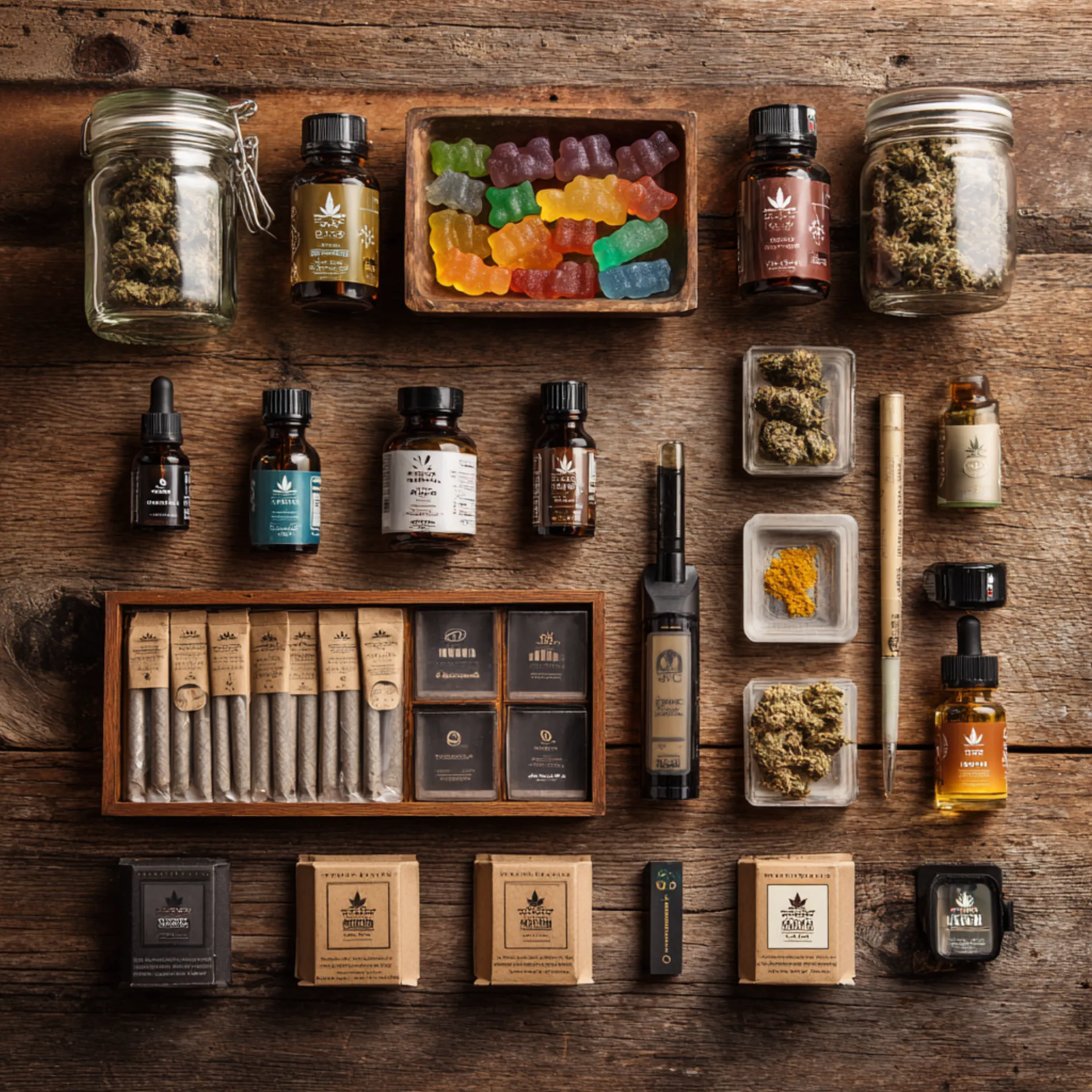
Cannabis Product Types Explained: Flower, Edibles, Concentrates, and More
From flower to vapes to tinctures — every cannabis product type explained. Learn how they're made, how they feel, and which one fits your lifestyle.
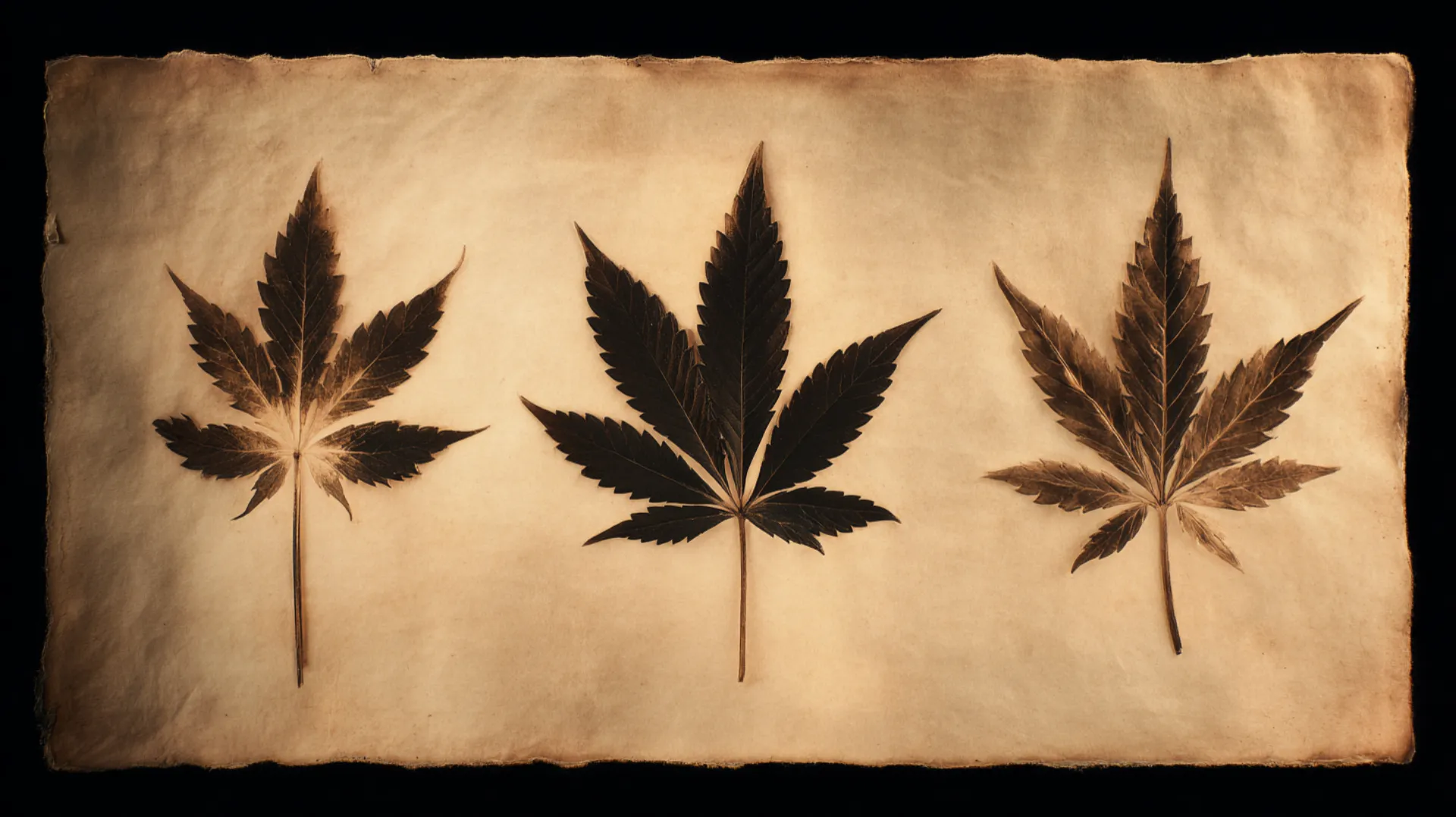
Indica vs Sativa vs Hybrid: What's the Difference?
A complete guide to the three main cannabis types — indica, sativa, and hybrid. Learn how they differ in effects, appearance, and which one is right for you.