What Are Terpenes? The Hidden Force Behind Cannabis Effects
Terpenes do more than create flavor and aroma — they actively shape your cannabis experience. Learn the major terpenes, their effects, and why they matter.
By Hightree Team for The Canopy
March 18, 2026 · 5 min read
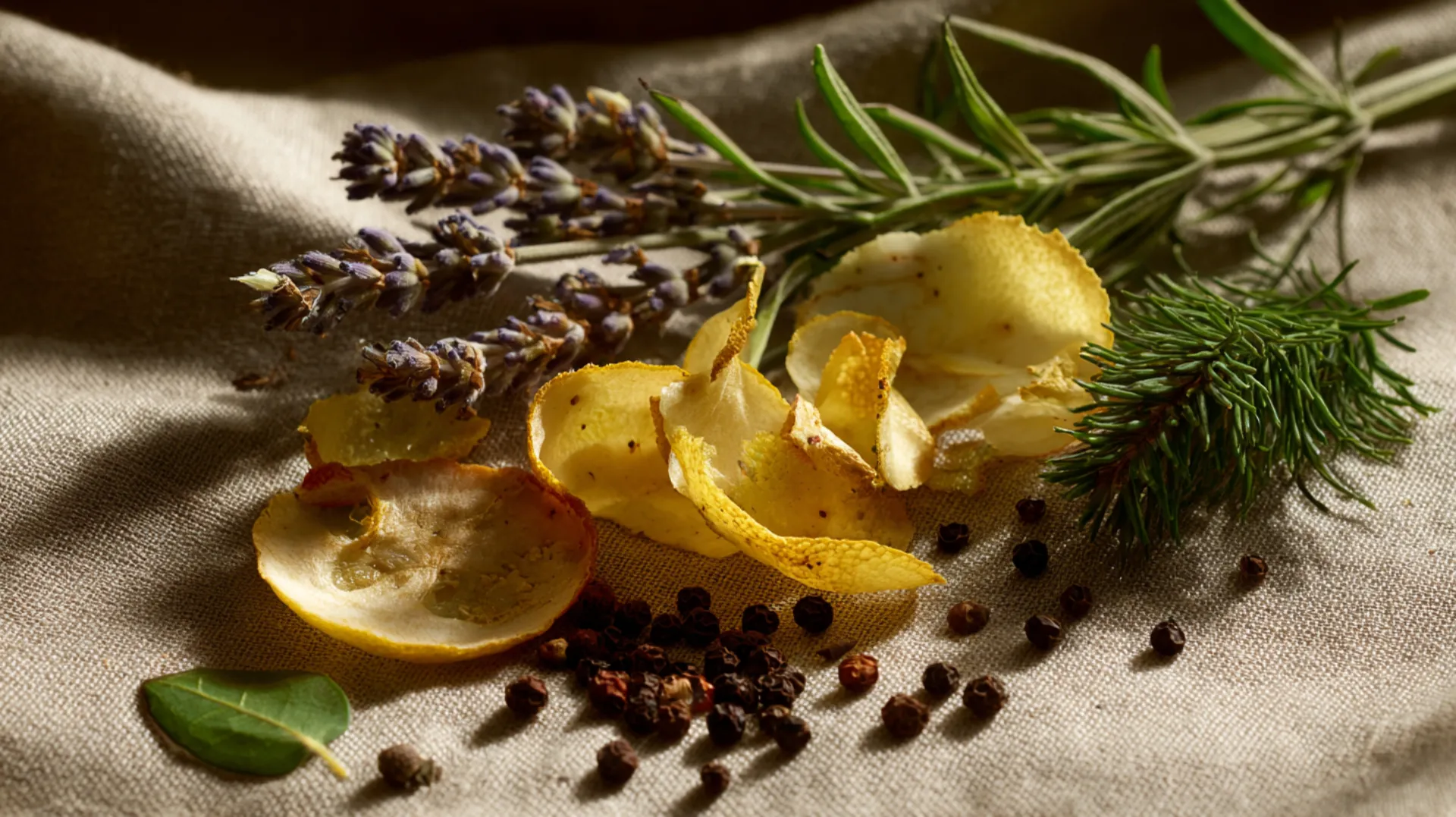
Lavender sprigs, lemon peels, pine needles, and peppercorns arranged on warm linen
If you've ever wondered why two strains with the same THC percentage can feel completely different, the answer is terpenes.
Terpenes are aromatic compounds found in all plants — not just cannabis. They're what makes lavender smell like lavender, lemons smell like lemons, and pine trees smell like pine trees. In cannabis, they do something more: they actively influence how you feel.
The Entourage Effect
In 1998, researchers Raphael Mechoulam and Shimon Ben-Shabat proposed the entourage effect — the idea that cannabis compounds work better together than in isolation.
THC alone produces psychoactive effects. But THC combined with specific terpenes and other cannabinoids produces a different, often more nuanced experience. This is why full-spectrum products (containing the full range of plant compounds) tend to feel different from pure THC distillate.
Terpenes aren't just passengers. They're active participants in your cannabis experience.
The Major Cannabis Terpenes
Myrcene
- Aroma: earthy, musky, herbal (like hops)
- Also found in: mangos, lemongrass, thyme
- Effects: relaxing, sedating, muscle relaxant
- Strains high in myrcene: Granddaddy Purple, OG Kush, Blue Dream
Myrcene is the most common terpene in cannabis. It's the primary reason some strains make you feel heavy and sleepy. Research suggests myrcene may enhance THC absorption across the blood-brain barrier, potentially making THC more effective.
Limonene
- Aroma: citrus, lemon, orange
- Also found in: citrus peels, juniper, peppermint
- Effects: uplifting, stress relief, mood elevation
- Strains high in limonene: Super Lemon Haze, Durban Poison, Jack Herer
Limonene is associated with elevated mood and stress relief. Studies have shown it has anti-anxiety and antidepressant properties. It may also aid in the absorption of other terpenes through the skin and mucous membranes.
Pinene
- Aroma: pine, fresh, woodsy
- Also found in: pine trees, rosemary, basil
- Effects: alertness, memory retention, anti-inflammatory
- Strains high in pinene: Jack Herer, Strawberry Cough, Blue Dream
Pinene is the most common terpene in nature. Research suggests it may counteract some of THC's short-term memory impairment, which is why pine-scented strains sometimes feel "clearer" than others.
Linalool
- Aroma: floral, lavender, spicy
- Also found in: lavender, coriander, cinnamon
- Effects: calming, anti-anxiety, sedating
- Strains high in linalool: Lavender, Amnesia Haze, LA Confidential
Linalool is why lavender is used in aromatherapy — it has well-documented calming properties. In cannabis, it contributes to the relaxing effects often associated with indica strains.
Caryophyllene
- Aroma: spicy, peppery, woody
- Also found in: black pepper, cloves, cinnamon
- Effects: anti-inflammatory, pain relief, stress relief
- Strains high in caryophyllene: GSC (Girl Scout Cookies), Bubba Kush, Sour Diesel
Caryophyllene is unique among terpenes because it directly binds to CB2 receptors in the endocannabinoid system — the same receptors that cannabinoids interact with. This makes it functionally both a terpene and a cannabinoid.
Humulene
- Aroma: earthy, woody, hoppy
- Also found in: hops, sage, ginseng
- Effects: appetite suppression, anti-inflammatory
- Strains high in humulene: White Widow, Headband, Pink Kush
While most cannabis strains are associated with appetite stimulation (the munchies), humulene may actually suppress appetite. It's also being studied for its anti-inflammatory and antibacterial properties.
Terpinolene
- Aroma: floral, herbal, slightly piney
- Also found in: nutmeg, tea tree, apples
- Effects: uplifting, creative, mildly sedating at high doses
- Strains high in terpinolene: Dutch Treat, Jack Herer, Ghost Train Haze
Terpinolene is relatively rare as a dominant terpene, which gives strains that feature it a distinctive, hard-to-pin-down character.
How to Use Terpene Information
When Shopping
- Check the terpene profile on lab reports if available
- Smell the product — your nose is a good guide to terpene content
- Note the dominant terpene — it's the strongest predictor of effects
- Look for total terpene content — higher percentages generally mean more flavor and more pronounced effects
Quick Reference
| Want this effect? | Look for this terpene |
|---|---|
| Relaxation / sleep | Myrcene, Linalool |
| Energy / focus | Limonene, Pinene |
| Pain relief | Caryophyllene, Myrcene |
| Anxiety relief | Linalool, Limonene |
| Creativity | Terpinolene, Limonene |
| Anti-inflammation | Caryophyllene, Humulene |
The Future of Terpene-Based Shopping
The cannabis industry is slowly shifting from the indica/sativa framework to a terpene-first approach. Some dispensaries now organize products by dominant terpene rather than strain type.
This makes sense: terpene profiles are measurable, consistent, and scientifically linked to specific effects. "High myrcene, moderate caryophyllene" tells you more about what to expect than "indica hybrid."
The Bottom Line
Terpenes are the reason cannabis is such a diverse experience. Two strains with identical THC percentages can feel completely different because of their terpene profiles.
Next time you shop for cannabis, look beyond THC. Check the terpene profile, trust your nose, and start building your personal map of which terpenes work best for you.

CBD vs. THC: What's the Difference?
CBD and THC are the two most well-known cannabinoids, but they work very differently. Here's what sets them apart — effects, legality, and which one is right for you.

Best Cannabis Strains for Anxiety and Stress Relief
Anxiety is one of the top reasons people turn to cannabis. But the wrong strain can make it worse. Here are the best strains for calm without the panic.

How Cannabis Edibles Are Made: From Plant to Product
Ever wondered how THC gets into a gummy? Here's the full process — decarboxylation, infusion, and formulation — explained simply.